Procurement Guide
How to Choose a Commercial Vegetable Cutting Machine
Buyers often compare vegetable cutters by headline capacity first. A more reliable purchase starts with the food, finished cut, daily workflow, cleaning method, and utilities at the installation site. This guide turns those requirements into a clear RFQ.
1. Start with the raw material
“Vegetables” is too broad for equipment selection. Leafy vegetables, long vegetables, firm roots, soft produce, and irregular ingredients behave differently during feeding and cutting. Record the items you process most often, their normal input dimensions, whether they arrive washed or trimmed, and how much variation operators see between batches.
Send representative photos to the supplier. If one machine must process both leafy and root vegetables, state that clearly. The supplier can then identify whether one feed path and cutter arrangement is appropriate or whether separate processing steps should be evaluated.
2. Define every required finished cut
Write the required result as a measurable specification: slice, strip, dice, segment, or cube, followed by the target dimensions and acceptable variation. Avoid relying only on menu names such as “salad cut” because they can mean different things in different markets.
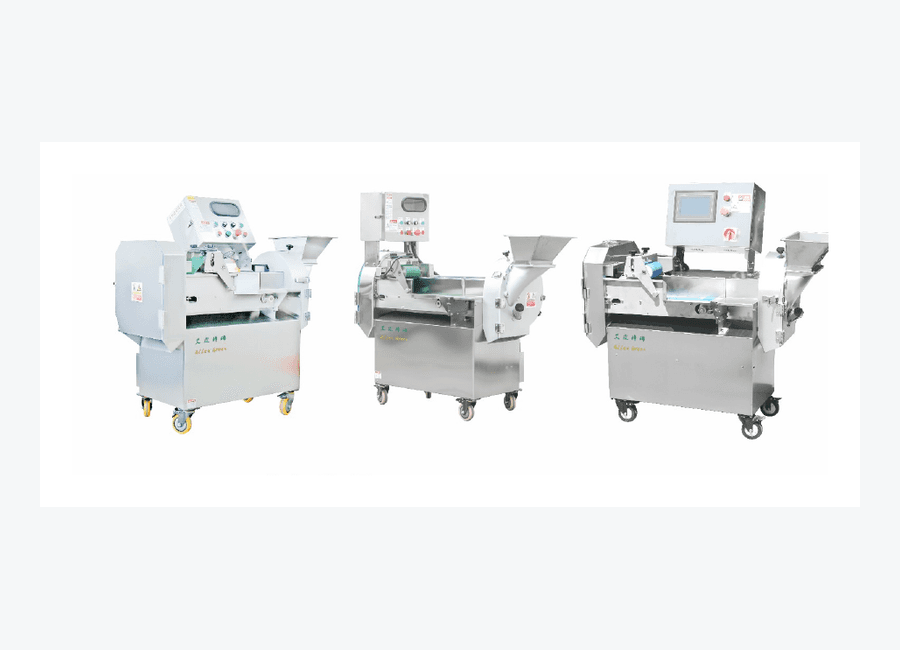
Ask which cutter assembly produces each result, what changeover involves, and which parts are included in the quotation. Our current range includes the YQC801 multifunctional vegetable cutter, the YQC501 double-head vegetable cutter, and dedicated slicing and dicing options. The correct choice depends on the agreed application and test, not the model name alone.
3. Translate demand into an operating profile
Hourly output is useful only when its test conditions match your process. Tell the supplier the required quantity per shift, peak periods, planned operating hours, batch size, and expected product changeovers. Also explain whether cutting is the bottleneck or whether washing, sorting, packing, or downstream cooking limits the line.
Request the assumptions behind any capacity figure, including the produce and cut used. A trial with comparable material gives more useful evidence than comparing unrelated catalog figures.
4. Review feeding, discharge, and operator work
Map the machine into the real production area. Check how operators load produce, where cut product exits, what containers or conveyors receive it, and how rejected material is handled. Confirm machine dimensions against doors, aisles, worktables, drainage, and service access.
For frequent recipe changes, discuss blade changeover, adjustment steps, and how operators prevent mixing components. For continuous production, ask how feeding can remain consistent without creating unsafe or awkward manual handling.
5. Evaluate cleaning and food-contact areas
Ask the supplier to identify food-contact parts, removable cutter components, areas that need tools to access, and the recommended cleaning sequence. Share the cleaning chemicals and wash method used at your facility so compatibility can be checked before purchase.
A useful pre-order review should cover how trapped food is removed, how blades are handled safely, how parts dry, and how the machine is inspected before the next production run. Do not assume a general material description answers every hygiene question.
6. Confirm utilities and site conditions
Include the destination country, available voltage, frequency, phase, plug or connection preference, ambient conditions, and any site restrictions in the RFQ. Ask the supplier to confirm the proposed electrical configuration in the final quotation and technical documents.
If the machine joins an existing line, provide inlet and outlet heights plus the nearby equipment layout. Confirm what installation work, protective devices, and local electrical work remain the buyer’s responsibility.
7. Agree on a sample test and acceptance evidence
A useful test plan names the raw material, input condition, required cut, run duration, and acceptance criteria. Ask for an unedited view of feeding, discharge, and finished product, plus close-up images that show cut consistency. Confirm the blade set and adjustments used.
If your exact produce cannot be supplied for a remote test, agree on the closest practical substitute and record the difference. Treat the result as evidence for discussion, not a guarantee for every ingredient or operating condition.
8. Compare the complete quotation
Compare included cutter sets, spare and wear parts, packing, documents, delivery terms, commissioning scope, training format, warranty terms, and after-sales communication—not just the machine price. Ask for a written list of inclusions and exclusions so competing offers can be normalized.
Before payment or shipment, ensure the final model, configuration, utilities, accessories, destination, and agreed test evidence appear in the commercial and technical documents.
Commercial vegetable cutter RFQ checklist
- Raw materials, normal input dimensions, condition, and photos
- Required cut types, target dimensions, and acceptable variation
- Quantity per shift, operating hours, peak demand, and changeovers
- Current upstream and downstream process
- Available voltage, frequency, phase, and installation location
- Cleaning method, access constraints, and operator workflow
- Requested test material, acceptance criteria, and evidence
- Required cutter sets, spare parts, documents, packing, and trade terms
Frequently asked questions
What information should I send when requesting a vegetable cutter quotation?
List each raw material, its normal input size and condition, the required finished cuts and sizes, expected operating hours, available electricity, cleaning requirements, installation location, and destination country. Photos or short process videos can reduce ambiguity.
Should I choose one multifunction cutter or separate machines?
A multifunction machine can suit mixed menus and frequent changeovers. Separate machines may be easier to evaluate when one cut dominates production or when different processes must run at the same time. The decision should follow your product mix and workflow, not machine capacity alone.
How should a buyer verify the required cut quality before ordering?
Agree on the raw material, target cut, acceptance criteria, and test method with the supplier. Request a trial using comparable produce and ask for clear output photos or video. Confirm which blade set and machine configuration were used in the test.